Atradius Atrium
保険契約情報、与信限度額申請ツール、インサイトに直接アクセスできます。

 日本
日本
 Brazil
 Portugal
 Spain
Spain
 アイルランド
 アラブ首長国連邦
 イギリス王国
 イタリア
イタリア
 インド
インド
 オーストラリア
 オーストリア
 オランダ
オランダ
 カナダ
カナダ
 ギリシャ
ギリシャ
 グループ
グループ
 シンガポール
 スイス
スイス
 スウェーデン
 スロバキア
スロバキア
 スロベニア
スロベニア
 チェコ共和国
 デンマーク
デンマーク
 ドイツ
ドイツ
 トルコ
トルコ
 ニュージーランド
 ノルウェー
ノルウェー
 ハンガリー
ハンガリー
 フィンランド
 フランス
フランス
 ブルガリア
ブルガリア
 ベルギー
ベルギー
 ポーランド
ポーランド
 メキシコ
メキシコ
 リトアニア
リトアニア
 ルーマニア
ルーマニア
 香港SAR
香港SAR
 中国
日本
中国
日本
 米国
米国
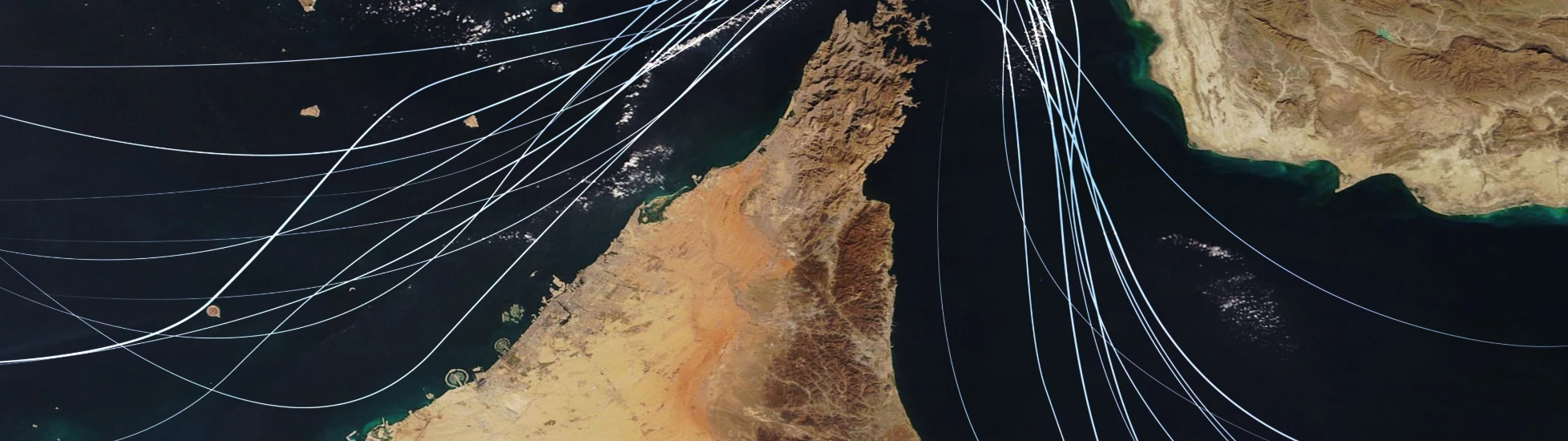
The Middle East war outlook has become increasingly difficult to read. Regional tensions have intensified, cross border strikes have widened, and trade corridors are facing disruptions. Markets and businesses are struggling to judge how far this escalation might go and how deeply it could unsettle energy supplies and economic activity. Against this backdrop of uncertainty, our outlook now rests on two possible scenarios. They differ mainly in how long the confrontation lasts and how severely it disrupts energy markets and regional activity.
In our baseline scenario, the Strait of Hormuz remains effectively closed until the end of April. Attacks on Gulf infrastructure cause limited damage, and disruptions to the Strait of Hormuz will be gradually resolved from May onwards. Shipping faces occasional interruptions, pushing oil prices into a range of USD 80–130 per barrel. The main pressure falls on the non-oil sectors in the Gulf region where confidence may take more time to recover.
Our worst-case scenario assumes a much longer conflict, stretching across multiple months and raising the risk of broader regional involvement. In this version, attempts at regime change combined with escalation through Iran’s proxies, lead to more structural damage to oil and gas capacity in the Gulf region. Persistent supply losses would lift oil prices to USD 110–150 per barrel, creating a deeper and more prolonged economic shock.
We still operate within our baseline scenario, although recent developments suggest a gradual shift towards the downside risks embedded in the worst‑case outlook.
According to Niels de Hoog, Senior Economist at Atradius, “We still operate within our baseline scenario, although recent developments suggest a gradual shift towards the downside risks embedded in the worst‑case outlook. The attacks have intensified across the Gulf and now include strikes on critical oil and gas facilities, which remains a source of concern”.
One of the most visible immediate effects of the crisis has been the sharp jump in oil prices. This reflects a combination of direct disruptions and mounting uncertainty over how the conflict may evolve. According to our Economic Risk Department, several factors came together at the same time, amplifying market tension.
First, with the Strait of Hormuz effectively shut, a significant volume of physical supply is being removed from the market. As a result of the closure of the Strait and safety considerations, countries in the Gulf were forced to implement production stops. When one of the world’s most critical energy corridors stalls, prices respond quickly.
Second, direct attacks on tankers and energy infrastructure raised operational risks for shippers and producers. Higher danger typically means higher costs, tighter capacity and, ultimately, higher prices.
Finally, signals that the conflict could last longer than initially expected pushed the risk premium materially higher, as investors adjusted to the prospect of more persistent disruption.
Gulf states entered the war with significant spare capacity, making a lasting price surge less likely. The key will be the speed at which tanker traffic through the Strait of Hormuz can normalise. When the Strait is opened again, flows may take several weeks to return to full capacity.
Despite the recent spike in oil prices, we still expect the overall impact on the energy market to remain relatively contained. As De Hoog explains, “Most of the outages so far have stemmed from storage bottlenecks and precautionary shutdowns, rather than physical damage to infrastructure, which means capacity can be restored relatively quickly once conditions stabilise. Gulf states entered the war with significant spare capacity, making a lasting price surge less likely. The key will be the speed at which tanker traffic through the Strait of Hormuz can normalise. When the Strait is opened again, flows may take several weeks to return to full capacity, as shipping requires both safety assurances and confidence before resuming regular passage”.
The crisis is set to weigh on growth across the region. In our baseline scenario, our economists expect downward revisions of around 0.4 to 1.7 percentage points for Middle Eastern economies that are least hit. The fallout is far from uniform. For more severely affected countries – like Qatar and Kuwait – the downward revision could be anywhere between 3.5 to 15.0 percentage points. As De Hoog notes, “In a more severe scenario, the growth impact across the region could exceed our current estimates. But the key point in our baseline view is that the shock is likely to be short‑lived and the downturns in 2026 will be followed by strong recoveries in 2027. The non‑oil sector would take the hardest hit, yet most economies should avoid recession and remain broadly resilient, with a solid recovery expected once conditions stabilize”.
Countries most exposed are those that rely on uninterrupted oil and gas production or smooth passage through the Strait of Hormuz. Kuwait faces pressure from enforced oil output cuts and storage limits, constraining exports. Qatar, highly dependent on LNG shipments through the Strait, would be particularly sensitive to any halt in LNG output and Iranian strikes have already cut its LNG export capacity by an estimated 17% for the coming years. The United Arab Emirates would see a service led slowdown as tourism softens and its trade hub role is disrupted. In Bahrain, stoppages at major industrial and energy facilities would translate into immediate output losses.
Elsewhere, the slowdown is more moderate. Egypt, outside the conflict zone, still contends with higher inflation, renewed foreign exchange pressure, and interruptions to gas supplies. Jordan feels the hit via weaker tourism and disrupted trade and gas imports rather than direct damage. Oman is cushioned by alternative trade routes, fewer attacks, and open airspace. Saudi Arabia also benefits from alternative routes and faces mainly a transitory oil impact, though tourism would weaken amid heightened uncertainty.
Inflation is the main transmission channel through which Europe is affected. After a cold winter, gas storage has fallen to around 30% of capacity, leaving the bloc poorly positioned for the refilling season. Wholesale gas prices directly feed into electricity and consumer prices, triggering high
But the slowdown does not stop at the region’s borders. In our baseline view, the drag is already very visible: world growth eases from 3.0% to about 2.6%, while the EU slips from around 1.3% to 1.0%. By 2027, the pressure fades, with the world at 3.0% and the EU at 1.7%, indicating no further effect.
The picture shifts under our worst‑case scenario. With sustained strain on energy markets, the hit deepens and accumulates. In 2026, world growth drops to around 2.5%, while the EU edges down to 0.6%. By 2027, the slowdown persists, leaving the world at 2.7% and Europe at 1.5%.
According to Theo Smid, Senior Economist at Atradius, “Inflation is the main transmission channel through which Europe is affected. After a cold winter, EU gas storage has fallen to around 30% of capacity, leaving the bloc poorly positioned for the refilling season. Wholesale gas prices directly feed into electricity and consumer prices, triggering higher inflation and lower consumer spending.”
In short, duration matters. A short, contained shock cools activity yet leaves the recovery intact. A longer, more intense conflict weighs more heavily on output and leaves a deeper economic dent.
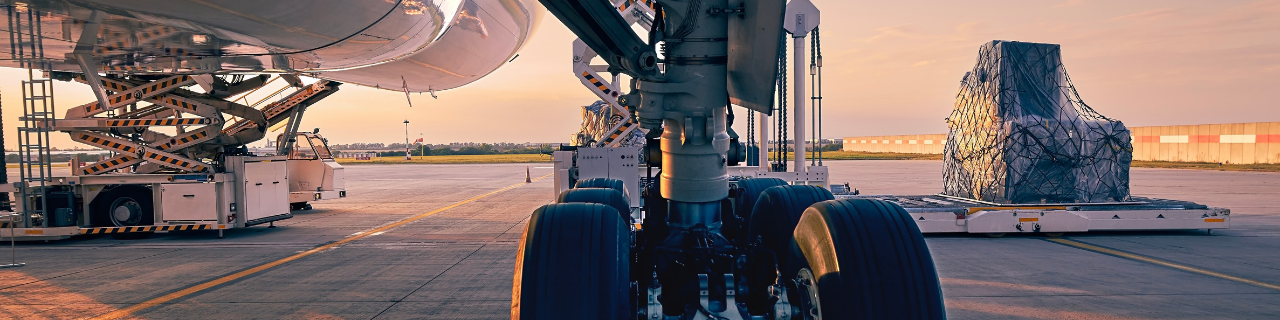
In our baseline scenario, the transport sector is among the first to feel the shock, with air transport growth about 0.4% lower than pre‑conflict expectations. The Middle East is a key hub for world logistics, and the conflict is disrupting both maritime and air‑freight routes linking Asia and Europe. Air cargo is particularly exposed because a significant share of China–Europe shipments normally crosses the Gulf. With routes diverted and fuel costs rising, freight prices remain elevated and risks are skewed to the downside. The goods most affected are high‑value and time‑sensitive such as advanced electronics, pharmaceuticals, and perishables.
Water transport output is expected to be 0.3% lower than pre‑war projections. The closure of the Strait of Hormuz has sharply reduced the availability of tankers, while non‑energy carriers remain cautious about returning to the Suez Canal. The system is more resilient than during the 2023 disruptions, thanks to excess capacity and widespread use of the Cape of Good Hope route, but higher oil prices are lifting vessel operating costs. Fuel typically accounts for 30–40% of total operating costs, so a sustained 50% rise in oil can push freight costs up by 15–20%. Asian exporters, facing longer distances to key markets, will have to bear the biggest increases in freight and insurance costs. European economies, despite being highly open to trade, face a smaller cost burden because they benefit from extensive intra‑EU trade.

Higher energy prices also hit the chemicals sector, which depends heavily on oil and gas for both energy and feedstocks. The Gulf supplies about half of world ethylene glycol exports and nearly 40% of methanol, both essential for plastics and industrial chemicals. It also accounts for roughly 45% of seaborne naphtha and more than 25% of key plastic inputs such as styrene and polyethylene. Delivery interruptions are pressuring manufacturers, especially in Asia, and chemicals growth next year is expected to be about 0.4% lower than previously envisaged. Outside the Middle East, European chemical producers are likely to be the hardest hit as higher gas prices compound long‑standing competitiveness challenges compared to China and the US.

Metals, particularly aluminium, face similar stress. The Gulf produces around one tenth of world aluminium, much of it shipped through the Strait of Hormuz. Any prolonged disruption would be difficult to offset: restarting idled smelters is slow and costly, and aluminium production is highly electricity‑intensive. Power typically represents 30-40% of production costs, so higher electricity prices can force smelters to cut output, tightening supply and pushing prices higher. European producers look most exposed due to the sharp increase in gas prices. Rising aluminium prices will lift input costs for major buyer industries, including automotive, construction, packaging and aerospace.

Agriculture is not spared. Fertiliser supply chains are vulnerable because gas is a critical input. The Middle East produces about 25% of world sulphur, 23% of urea, DAP and anhydrous ammonia. Roughly one third of seaborne fertiliser trade passes through the Strait. Disruptions to LNG facilities and shipping routes have already pushed up fertiliser prices, with sulphur now in short supply. Many Asian economies like China, India, Thailand, the Philippines, Vietnam, Pakistan or Sri Lanka rely heavily on Gulf exports and face this tightening at a difficult moment as sowing seasons begin across major rice‑ and corn‑producing regions.
Beyond agriculture, sulphuric acid, essential for processing copper, nickel and other battery metals, is also affected. A prolonged interruption in Strait of Hormuz traffic would risk tightening both fertiliser and battery‑metal supply chains, adding another layer of pressure to commodity markets.
Ultimately, the impact on the world economy and financial markets will hinge on the duration and intensity of the conflict. Despite the uncertainty, we continue to operate normally across the Middle East, ensuring coverage and support for our customers and partners. We monitor the evolution of risk associated with the commercial credit lines of our insureds in the region, follow developments closely and gather information from multiple sources to ensure that our responses remain precise and context specific.
To explore how to strengthen your own credit risk strategy, get in touch with us and see how we can help you stay ahead.


